
As the state eyes eliminating over 600 home care agencies, citing fraud, one lawmaker pitched a bill to reverse the planned overhaul.
By Raga Justin
Capitol Bureau, Albany Times Union
Sep 5, 2024
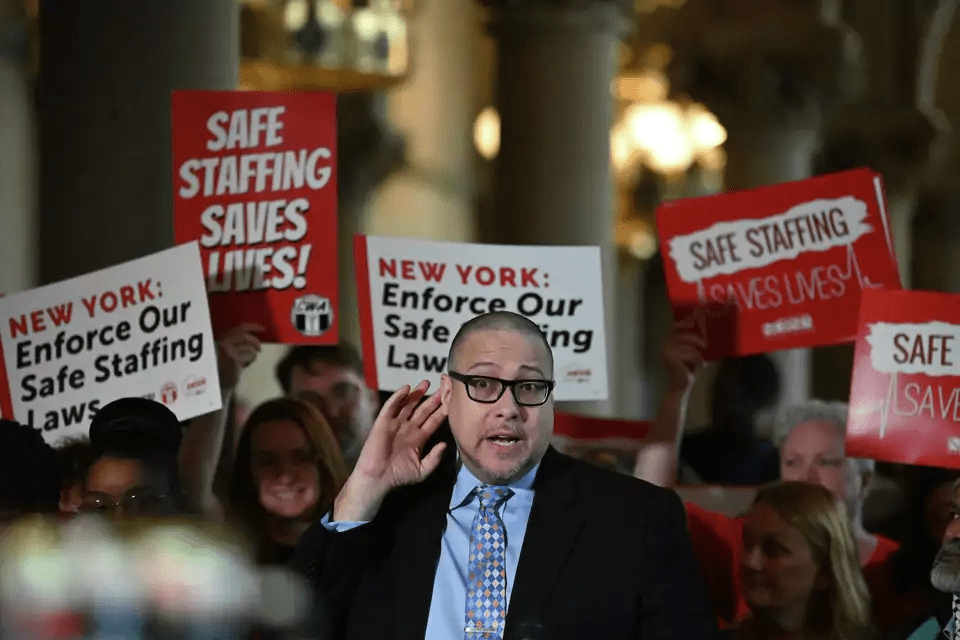
State Sen. Gustavo Rivera, a Bronx Democrat, introduced legislation this week that he said offers a compromise between Gov. Kathy Hochul’s plan to overhaul a popular home care program and the middlemen agencies who are fighting to keep their lucrative businesses operating. Will Waldron/Times Union
ALBANY — A Democratic lawmaker unhappy with the proposed changes to a widely popular home care program is pitching a last-minute legislative fix he contends would offer a compromise between Gov. Kathy Hochul’s budget leaders, who are concerned with increased Medicaid costs, and the industry that could be wiped out by its overhaul.
The bill set to be introduced by state Sen. Gustavo Rivera on Friday comes less than a month before an Oct. 1 deadline for the state Department of Health to choose a vendor to replace over 600 businesses who serve as middlemen in the popular Consumer Directed Personal Assistance Program.
That program has been the focus of mounting pressure campaigns this summer since Hochul said she intended to completely restructure it within a year in an attempt to rein in what she has characterized as rampant fraud. That controversial shakeup would involve eliminating the role of hundreds of “fiscal intermediaries,” or companies that act as brokers between Medicaid and patients with long-term medical conditions or disabilities who can choose their own caregivers, including family members.
Instead, Hochul said New York would contract with a single vendor to streamline and administer CDPAP services to over a quarter million New Yorkers.
That didn’t go over well with the over 600 fiscal intermediaries scattered across the state. Over the summer, a group called Alliance to Protect Home Care spent millions of dollars attempting to get state lawmakers to halt the shakeup or reverse it entirely. They also filed a lawsuit in August to try and thwart the proposed changes.
Now, the lawmaker chairing the state Senate’s Health Committee has introduced a bill that would halt the transition to a single fiscal intermediary while implementing new guardrails to protect against some of the overspending Hochul has decried.
Rivera, a progressive Democrat from the Bronx, called Hochul’s plan an “unreasonable” attempt to fix the CDPAP program and said his legislation would create a licensing process to better regulate the cottage industry of fiscal intermediaries that has sprung up around the program in recent years.
Under the proposed bill, more power would be given to the commissioner of the Department of Health to require annual reporting from the home care agencies involved in the program, as well as require them to be licensed after April 1, 2026 through a new licensing process the department would also be tasked with creating. State officials have complained they do not have an exact number of fiscal intermediaries operating across the state.
It would also require each business operating as a fiscal intermediary to pay a one-time licensing fee of $10,000, as well as require that the businesses be prohibited from advertising their services. Both clauses come in response to complaints that the program has in some cases encouraged unscrupulous behavior.
“I recognize that there are changes that are necessary, that there have been bad actors,” Rivera said. “But instead of throwing out the baby with the bathwater, it’s electrifying the baby in the damn tub. Let’s not do that. Let’s actually think through how this could be done more efficiently.”
Other provisions in the bill include: requiring the health commissioner to make regulations and issue guidance for shuttering fiscal intermediaries; establishing a process to discipline fiscal intermediaries that do not comply; setting up a registry for caregivers who are enrolled under the program, and creating minimum training requirements for caregivers.
It’s unclear whether the bill will pacify both businesses who are angered that their services may soon be on the chopping block and Hochul, who has stood firm on the policy. Rivera said he’s spoken to stakeholders for months and is confident it would find favor among both Democrats and Republicans during the next legislative season.
The program is beloved by numerous consumers but has also been criticized for its rapidly ballooning growth in recent years, at a time when Hochul and budget officials have attempted to control exorbitant health care costs.
After the change was unveiled during last-minute budget talks earlier this year, Rivera said he had been unhappy with its potential ramifications on Medicaid enrollees who receive services through the program. Advocates of the program have argued that funneling all of the paperwork and administrative requirements through a single company could be disruptive for the nearly 250,000 thousand clients.
n August, several Democrats in the Legislature protested the forthcoming changes in a letter to federal administrators with the Centers for Medicaid and Medicare, urging them to weigh in or halt the planned switch.
Also in August, home care agencies who would be affected by the switch filed a lawsuit in state Supreme Court in Albany asking a judge to issue a temporary restraining order to halt the massive contract for a single fiscal intermediary.
Whether Hochul will adjust the Oct. 1 deadline for the state to announce which vendor will receive the multi-billion-dollar contract remains to be seen.
Bryan O’Malley, who represents many of the fiscal intermediaries and has been spearheading the interest group lobbying to stop the overhaul, said in a statement he is pleased with Rivera’s bill.
“We applaud Sen. Rivera for introducing this bill and taking a stand against Gov. Hochul’s plan to gut New York’s home care program that allows 250,000 elderly and disabled to receive the health care they need from the comfort of their homes,” O’Malley said. “Handing over this critical program to one big company isn’t the answer and will potentially force thousands into expensive and overwhelmed nursing homes.”
 ENYDDA