New Guidance for the Management of Communicable Respiratory Viral Illnesses Published

The Office for People With Developmental Disabilities (OPWDD), in collaboration with the Department of Health, is pleased to provide updated guidance for the management of communicable respiratory viral illnesses in OPWDD certified settings. 

Today’s two guidance documents replace the most recent Management of Communicable Respiratory Viral Infections, issued in February of 2024, which applied to all OPWDD settings.  As COVID-19 has become increasingly manageable, we have seen the CDC adjust their guidance surrounding not just COVID-19 but all respiratory viral illnesses, such as the flu and RSV. We have further separated the guidance into (a) recommendations for healthcare settings (ICFs and specialty hospitals) and (b) recommendations for community-based settings, consistent with the CDC. For community-based settings, the mere exposure to a communicable respiratory virus will no longer necessitate the quarantine of a program participant, absent factors outlined and depending upon a program’s specific policies.

These new guidance documents are being implemented effective immediately and are available here:

Respiratory Viral Transmission Infection Control Guidance for COVID-19, Influenza and Respiratory Syncytial Virus in Intermediate Care Facilities and Specialty Hospitals

Respiratory Viral Transmission Infection Control Guidance for COVID-19, Influenza and Respiratory Syncytial Virus in Community-Based Settings and Programs

View the OPWDD Regulations and Guidance Page

State agrees to delay deadline for contentious home care consolidation

he state has agreed to delay the deadline for its troubled home care overhaul until June, aiming to quell fears that caregivers wouldn’t receive paychecks on time under a new payment system.

Attorneys for the state and home care users proposed an agreement on Wednesday night that delays the state’s deadline to overhaul the consumer-directed personal assistance program, also known as CDPAP, until June 6. The state aimed to transition roughly 280,000 home care users and their caregivers to a new payment system by April 1, but slow enrollment and technical challenges that threatened to disrupt access to care have forced state officials to concede to a later date. 

The proposed preliminary injunction, which must be reviewed by a federal judge, is the latest hurdle for the state’s contentious transition, which was spearheaded by Gov. Kathy Hochul last year to cut Medicaid costs. The Hochul administration contracted with a single payroll processing company, Georgia-based Public Partnerships LLC, or PPL, to pay caregivers through the program, replacing the roughly 600 third-party businesses that previously held that job. Since January, health officials have scrambled to enroll all home care users and workers with the new company, but efforts have stalled amid industry pushback, staffing challenges and court orders that have postponed the state’s deadline to complete the task.

Under the new agreement, home care users will have until May 15 to enroll in the new system and workers will have until June 6, according to the proposal. Consumers who themselves have not fully moved over to the new system or whose caregivers have had trouble signing up can use their old company to process worker payments in the meantime, but must continue registering with PPL by the new deadline, the proposed order says. PPL will offer an expedited registration process for those who cannot be paid through the old system. 

“This proposed agreement supports the state’s ongoing CDPAP transition and ensures our reforms will proceed in full,” said Sam Spokony, a spokesman for the governor’s office, adding that the proposal will have no impact on the consumers and workers who have already completed their registration with PPL.

Spokony criticized misinformation about the transition. “The $10 million dark money campaign by shady business groups has failed to stop New York state’s much-needed CDPAP reforms, which will protect CDPAP for people who need it and put an end to runaway bureaucratic spending in this taxpayer-funded program,” he said.

As the state prepared to move all home care users and workers to PPL’s payment platform by April 1, many raised concerns that the company was ill-prepared to enroll people and process payments by the deadline. The state extended its registration period for 30 days and offered to pay workers retroactively for services rendered, but the move led to confusion and fears that people would lose services.

Days before the transition was supposed to come to a close, the New York Legal Assistance Group filed a lawsuit on behalf of home care consumers and businesses alleging major technical challenges that barred people from signing up with the new system and potentially disrupted care. The lawsuit led Judge Frederic Block, who presides over a federal court in Brooklyn, to issue a temporary restraining order last week, allowing the third-party businesses that used to pay personal assistants to continue serving home care users who had yet to enroll in the new system. The completion of the overhaul remained in limbo for days as attorneys for the state and home care users negotiated a deal to preserve access to care. Block is set to decide on the proposed agreement to delay the deadline in the coming days.

Advocates for home care users and the industry say the agreed-upon delay points to failures in the state’s transition plan.

“The Department of Health is fully admitting that PPL is not up to the job and that thousands of consumers are facing disruption of care,” said Bryan O’Malley, executive director of the lobbying group Alliance to Protect Home Care. “Considering PPL has screwed this up since the beginning, what makes anyone believe this will be any different with another two months?”

April 10, 2025: This story has been updated to say it is not clear when the federal judge will decide on the proposed preliminary injunction. 

Trump Administration To Close Agency Promoting Community Living For People With IDD

by Michelle Diament | March 31, 2025

A government agency that funds services and supports for people with disabilities living in the community will be broken up as part of a massive reorganization of the U.S. Department of Health and Human Services.

The agency’s Administration for Community Living, which oversees programs helping people with disabilities access all range of services in their communities and advocates for the needs of people with disabilities, older adults, families and caregivers across the federal government, will be shuttered.

“The critical programs within the Administration for Community Living (ACL) that support older adults and people of all ages with disabilities will be split across the Administration for Children and Families (ACF), Assistant Secretary for Planning and Evaluation (ASPE), and Centers for Medicare and Medicaid Services (CMS),” HHS said.

The changes announced late last week are part of what federal officials described as a “dramatic restructuring” of the health agency aimed at improving efficiency. Through the effort, the department will lay off about 10,000 employees. Combined with early retirements and buyouts since the Trump administration took over, HHS said it expects to downsize its workforce from 82,000 to 62,000 full-time employees.

In addition, the current 28 HHS divisions will be consolidated down to 15 and regional offices will be trimmed from 10 to five, officials said.

“We’re going to eliminate an entire alphabet soup of departments and agencies while preserving their core functions,” Secretary of Health and Human Services Robert F. Kennedy Jr. said. “We’re going to do more with less.”

The Administration for Community Living was established in 2012 in an effort to bring together aging and disability programs across HHS in recognition of the fact that most people in these populations live in the community and want to remain there.

The agency funds and works with over 2,500 community organizations nationwide including centers for independent living, protection and advocacy systems, developmental disabilities councils and much more, according to Alison Barkoff, a professor at George Washington University who led the Administration for Community Living under the Biden administration.

People “might not have heard of the Administration for Community Living, but they’ve probably benefited from ACL’s programs,” she said, citing examples ranging from respite care services to help accessing special education or Medicaid benefits, employment assistance for transition-age youth and in-home supports and services. “I don’t see how you can have that level of cuts in staff without seeing an impact on programs and services.”

More than that, Barkoff said that the existence of the Administration for Community Living ensured that federal agencies considered the needs of people with disabilities in decision-making.

“ACL had a seat at the table with the secretary, with leaders of programs. If ACL is broken up, they will not have that seat at the table. The disability voice is being lost,” Barkoff said.

Representatives from HHS did not respond to questions about how the Administration for Community Living’s responsibilities will be divided or how many current staff will be let go.

“This consolidation allows the department to better meet the current health needs of vulnerable populations across the country. This does not impact the important work of these critical programs as it will continue elsewhere within HHS,” an HHS official told Disability Scoop.

Advocates from several disability organizations said they were shocked by the move to dismantle the Administration for Community Living, particularly given that it was established as a centralized hub in order to promote efficiency and prevent duplication.

“For over a decade, the Administration for Community Living has provided critical oversight and funding for programs that protect against abuse, promote community living and support family caregivers,” said Julie Ward, senior executive officer of public policy at The Arc of the United States. “Without a dedicated agency to champion these programs, millions risk losing the oversight, funding and technical assistance for programs they rely on to live independently. We urge the administration to halt this reorganization and engage directly with the disability community before making changes that could jeopardize their rights and well-being.”–


BIG News – Judge Temporarily BLOCKS PPL Transition

Hi Everyone,

BREAKING: We’ve won a major victory! A federal judge in Brooklyn issued a temporary restraining order (TRO) on the CDPAP transition tonight, halting the transition for at least three days.

This ruling couldn’t have happened if we hadn’t put our bodies on the line and made clear just how much devastation this ruling would cause. Thanks to us, it has become impossible for anyone to ignore the glaring flaws in the PPL plan.

We’re still reviewing the ruling and will have additional information to share tomorrow. But this is undeniably good news and a direct result of our collective action.

The fight isn’t over. The court will hold a hearing Friday to decide whether to extend this delay.

Here’s how to keep the pressure on:

  • Call Your Legislators: Call Gov. Hochul, Speaker Heastie, and Senator Andrea Stewart-Cousins to demand they permanently STOP the CDPAP transition. (Here’s our call-in toolkit).
  • Share PPL Horror Stories: Share our Twitter thread documenting consumers’ and workers’ failed enrollment attempts.
  • Join Our Water Cooler and Learn More: Connect Tuesday, Wednesday and Thursday at 7:00 pm. (Registration link).Tomorrow, Michael Kinnucan at the Fiscal Policy Institute will discuss the TRO, along with the PPL Health Plan and its impact on PAs.

This TRO shows our voices are being heard, but we need to keep pushing. We have many friends in our fight and the list is growing – just this week, the AARPNY NAACPNational Domestic Workers Alliance Medicaid MattersLegal Aid SocietyNational Center for Law and Economic JusticeNational Employment Law Project, and more have called for a delay.

But for now, take a moment to breathe and celebrate this victory. There’s still work ahead, but today proved that together, we can win this fight.

Stay tuned for more updates,

How does the Justice Center support families? Find out!

Navigating investigation and support services can feel challenging. We want to make sure you have all the information you need! 
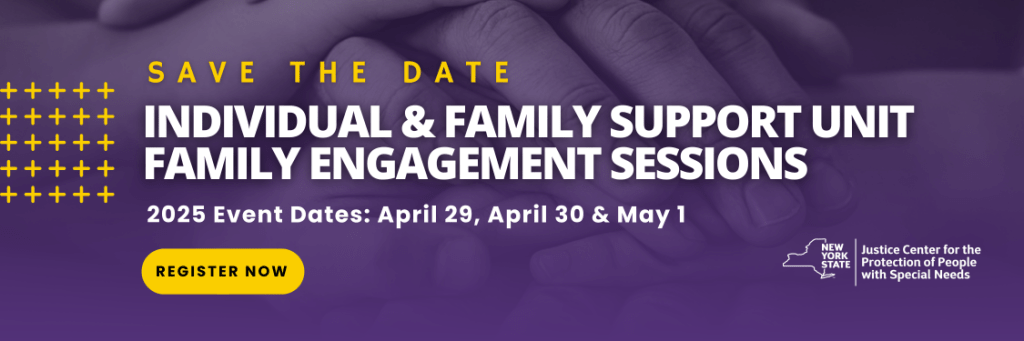
Join members of our Individual & Family Support Unit for a helpful, informative session on the many services and supports they provide to individuals receiving services, family members, and personal representatives during the investigation process. It’s your chance to have your questions answered and to learn more. 
Who Should Attend: Individuals receiving services, family members, peer advocates, personal representatives, and provider and agency staff. Available webinar dates: April 29: Noon – 1 PMApril 30: 7 PM – 8 PMMay 1: Noon – 1 PMUse the link below to register for any of the sessions above.
Register Now
Questions about the event? Please contact: jc.sm.outreachevents@justicecenter.ny.gov

CDPAP Transitioning to Public Partnerships

CONSUMER DIRECTED ASSISTANCE PROGRAM (CDPAP) TRANSITION TO PUBLIC PARTNERSHIPS
Online Tuesday, February 25, 12-1 p.m.
Attention CDPAP Consumers and Personal Assistants! The Consumer Directed Personal Assistance Program (CDPAP) is transitioning to Public Partnerships LLC (PPL) as the new statewide fiscal intermediary.
We are holding forums with Public Partnerships (PPL) to discuss the steps members and their personal assistants need to take by 3/28/25 in order to continue to receive CDPAP services.
REGISTER NOW
Questions? Contact Member Relations.

An Important Message about Federal Funding from Acting Commissioner Baer

2024 Lockup BAn Important Message about Federal Funding
from Acting Commissioner Willow Baer

Dear Colleagues and Friends,
Many people have raised concerns about the current federal administration’s plans to cut funding for programs and services that New Yorkers rely on and the potential impact for the developmental disabilities’ sector.
OPWDD shares your concerns and is closely monitoring these announcements to identify any changes that could affect our programs and services. No changes have occurred yet which will impact funding for OPWDD programs.  While I know that information is circulating fast, you should know that under Governor Hochul’s leadership, New York State is working with the NYS Attorney General to ensure that all monies due to our state are delivered as promised.
You may have heard about a freeze on certain federal grants, loans, and aid.  After two days of confusion across the country and several lawsuits, including one led by New York State, an order was issued by the Chief Judge of the District of Rhode Island prohibiting the federal government from interfering with such financial assistance to the States until a hearing can be held. In short, legal efforts to prevent the federal government from freezing funds have been successful so far.
The Governor shares our commitment to maintaining quality services for people with developmental disabilities in the state of NY.  We will do our best to keep you updated as we receive information from the federal government.

Sincerely,

Willow Baer
Acting Commissioner