OPWDD Invites You to Take the Care Coordination Program Evaluation Survey

Dear Friends,

On behalf of OPWDD and the American Institutes for Research, I am pleased to share an opportunity for people with lived disability experience and their family members to provide feedback on your experiences with care management.

OPWDD currently has a contract with the American Institutes for Research to conduct an independent evaluation of the Care Coordination program. The goal of the evaluation is to learn what parts of the program are working well and what areas could be improved.  

We know that those of you who interact on a regular basis with Care Coordination Organizations and care managers can help us understand how we can strengthen care management going forward. We hope you will take a few moments to participate in the Care Coordination Evaluation survey. The online survey will be open until August 26, 2024.

To participate in the survey visit: https://survey.alchemer.com/s3/7823011/OPWDDCareCoordinationSurvey

Learn more about this project at https://opwdd.ny.gov/american-rescue-plan-act-arpa.

I look forward to hearing your thoughts about this important service.

Thank you,

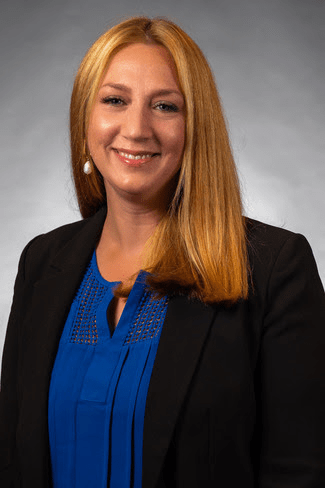
Willow Baer
Acting Commissioner

A Message From OPWDD’s New Acting Commissioner Willow Baer

Dear Friends and Colleagues,   

Commissioner Neifeld has departed OPWDD to focus on her growing family and I am honored to have been asked to serve as your next Acting Commissioner. I am grateful to Commissioner Neifeld for her years of service to our community and am humbled to continue to work with the amazing team at OPWDD in this new role, as well as our incredible community of self-advocates, parents, providers, and Care Coordination Organizations, as we continue to advance the agency’s mission of providing person-centered and quality services for people with developmental disabilities.  

My history with the agency as Executive Deputy Commissioner and, before that, as Deputy Commissioner and General Counsel has allowed me to be deeply involved in the operations and oversight of the agency.  I also have a very personal connection to our work, as a family member of a person with a developmental disability.  

I am grateful that, under Governor Hochul’s leadership, New York State has restored its status as a national leader in providing services to people with developmental disabilities with policies that prioritize greater independence, innovative housing options, and community integration.  I am so excited to continue to elevate this work and advocate with this community. 

When I think about how far our service system has come over the last 50 years, from one of institutionalization to one that prioritizes community inclusion, I’m encouraged  while remaining aware that there is much more to be done. Successful service systems must continue to evolve to meet changing needs and maximize new opportunities.  

Some of the areas within our strategic plan that I am particularly interested in prioritizing include: the use of emerging technology to support people to live more independently; cross systems work to ensure people with developmental disabilities have better access to appropriate healthcare; stabilizing OPWDD’s network of providers; and ensuring a more responsive, equitable, and accessible service system through data-driven decision-making which is also informed more directly by the experiences of those using our services.    

There are many hurdles that we still face, including the need for enough staff to support people, generations of caregivers who are aging and wondering what will happen to their loved ones when they are gone, a growing number of young families who have recently found out their child may need additional supports, and the turnover of care managers and direct support professionals. Please know I realize that none of these initiatives will succeed without continued investments in our workforce, additional cross-agency collaborations, improved communication, and new approaches to the critical work that we do.   

I look forward to partnering with and getting to know all of you in my new role. Together, we will keep working to ensure that New York is a state that is inclusive, supportive, and one where those with disabilities live with meaningful choice and are proud to call home.   

Sincerely, 

Willow Baer,
Acting Commissioner

A Warm Welcome toActing Commissioner, Willow Baer 

As of July 1, Executive Deputy Commissioner Willow Baer has assumed the role of Acting Commissioner of OPWDD. Having served as the second in command at the agency for the last year after returning to OPWDD from an interim position as Assistant Counsel to the Governor and from her role as Deputy Commissioner and General Counsel at the New York State Office of Children and Family Services, Willow Baer is well prepared to lead the agency as it meets the stated goals of its Strategic Plan. Prior to working with OCFS, Willow spent six years at OPWDD, most recently serving as Deputy Commissioner and General Counsel. 

Willow initially joined OPWDD in 2015 as an Associate Counsel after serving as General Counsel at the NYS Justice Center.

Willow has spent much of her career working to ensure that people with developmental disabilities and their families are afforded the best service system possible. Welcome, Acting Commissioner Baer!

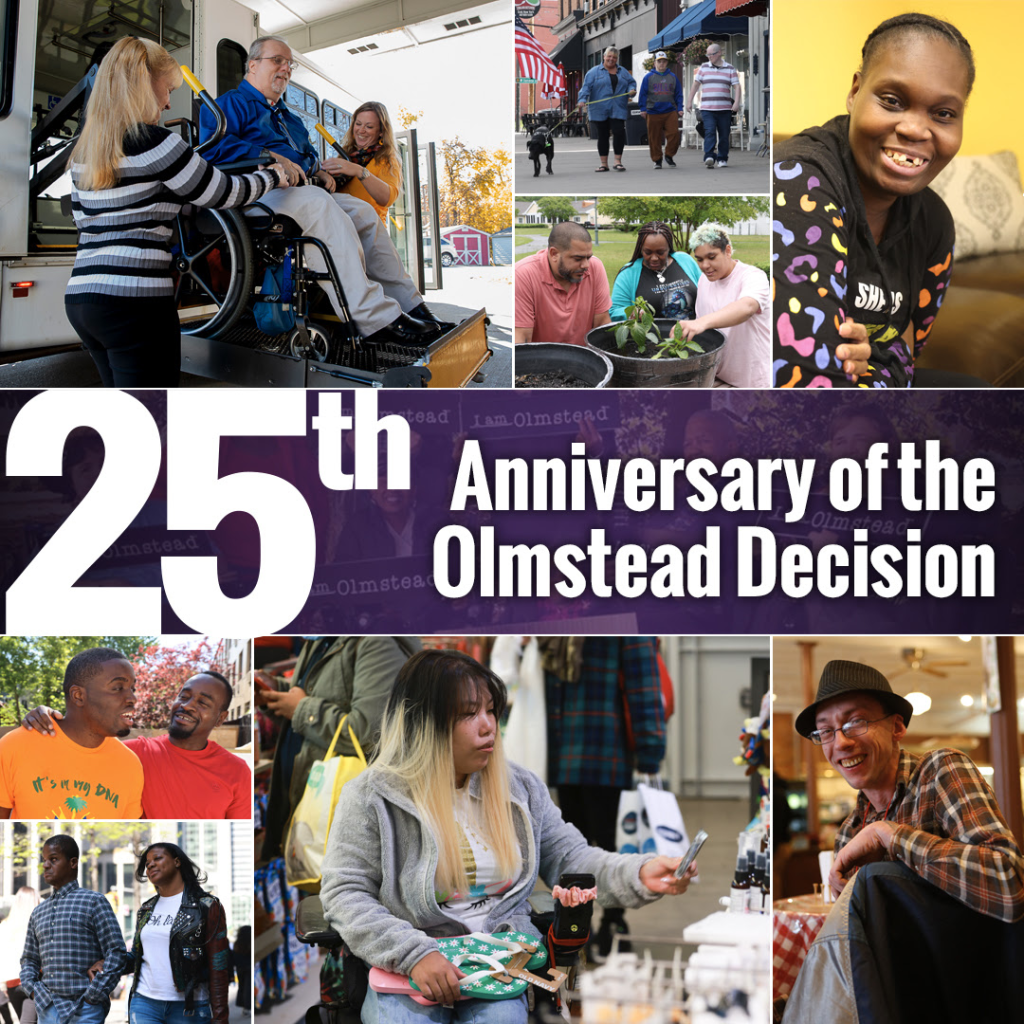
Celebrating the 25th Anniversary of the Olmstead Decision

Dear Friends and Colleagues,

Today, we celebrate the 25th Anniversary of the Supreme Court’s Olmstead Decision. This law enshrines the rights of people with disabilities to receive services in their communities rather than in institutions. It is a day also to celebrate and acknowledge the many years of advocacy that came before this landmark decision by those who refused to believe that society was not designed to be inclusive for people with disabilities. Instead, they fought for the right for people with disabilities to live, work and receive their healthcare in communities of their choice. I am proud to work for an administration that prioritizes the needs of people of all abilities, and OPWDD looks forward to thoroughly examining New York’s Olmstead Plan for ways to make even more meaningful change for those it impacts the most.

The spirit of the Olmstead Decision has always been at the heart of the developmental disabilities service delivery system and everything OPWDD does. By continuing to support and strive for increased independence and choice for people with developmental disabilities, we have transformed from a system of institutionalization to one that prioritizes community integration and recognizes the inherent autonomy and dignity of each person.

I am so grateful that OPWDD’s guiding policies have evolved and transformed to best meet the needs of people with developmental disabilities over the last 50 years. And I know that we will continue to work side-by-side with self-advocates, their loved ones, and our provider partners to effectuate even more positive change in the future. In the last few years alone, New York State and OPWDD have put into motion several initiatives to improve the lives of people with disabilities and foster independence. These include the creation of the Office of the Chief Disability Officer, a new supported decision-making option that enables people with developmental disabilities to direct their own lives with the help of a circle of trusted people instead of through traditional guardianship arrangements, expanding supportive housing models, increasing vocational training opportunities, and encouraging businesses to employ people with developmental disabilities, to name just a few.

As we reflect on the progress people with disabilities have made since Olmstead, we must not lose sight that the very things we continue to advocate for are the fundamental rights of all human beings, regardless of their disability status.  These include the right to enjoy meaningful relationships with friends, family, and other people, the right to experience personal health and growth, and to fully participate in their community. Let this year’s milestone anniversary remind each of you of the power of advocacy and strengthen your individual efforts towards achieving full inclusion.

Sincerely,


Kerri E. Neifeld
Commissioner

2024 Strategic Planning Forums ContinueOPWDD WANTS TO HEAR FROM YOU!

There is still time to join us for one of our 2024 Strategic Planning Forums to share your feedback on our 2023 – 2027 Strategic Plan. At each forum OPWDD staff will provide updates on our Strategic Plan, respond to pre-submitted questions, and listen to your feedback during our public comment period.

There are two remaining opportunities to attend in-person forums and two opportunities to participate in statewide virtual forums.

In-Person Forums

To participate in an in-person forum, visit our website where you can register, submit questions, and sign up for public comment.

  • Hudson Valley (Rockland) June 18, 4:30 – 6:30 PM New City Library – High Tor Mtg. Room 220 N Main St. New City, NY 10956
  • NYC (Bronx) July 9, 11 AM – 1 PM Lefrak Auditorium of the Price Center Albert Einstein College of Medicine 1301 Morris Park Ave. Bronx, NY 10461
REGISTER FOR AN IN-PERSON FORUM HERE

Virtual Forums

To register to participate in one of the virtual forums, use the links below.

Learn about Supported Decision-Making

MEMBER AND FAMILY FORUM
SUPPORTED DECISION-MAKINGOnline Tuesday, May 14, 6–7 p.m.

 Supported Decision-Making (SDM) is when people with disabilities get help from trusted people to make decisions. They still keep all their rights. In New York, SDM is seen as a legally recognized, less restrictive alternative to guardianship. Join us to learn more about this option.
REGISTER NOW
Questions? Contact Member Relations.

Times Union-NY’s largest health vendor linked to owner accused of fraud, neglect

N.Y.’s largest health vendor linked to owner accused of fraud, neglect

New York has contracts worth $27 billion with a company closely linked to a nursing home conglomerate that’s accused of fraud in a state attorney general’s investigation.

By Raga Justin April 7, 2024

The Schenectady Center for Rehabilitation and Nursing is a Capital Region nursing facility owned by the Bronx-based Centers Health Care. The nursing home conglomerate’s owner was named in a state attorney general’s lawsuit last year that alleged several fraud and neglect charges stemming from four other Centers facilities.

Will Waldron/Times Union

ALBANY— State Attorney General Letitia James stood at a podium late last June to announce her office had filed another civil case against allegedly nefarious nursing home operators, this one targeting four facilities and their Bronx-based parent company, Centers Health Care. 

James accused two Centers Health Care executives of orchestrating “multiple fraudulent schemes” that siphoned millions from the state’s Medicaid program to enrich themselves, their business associates and also to purchase a flailing Israeli airline. She pointed to disturbing, graphic examples of hundreds of elderly residents forced to endure harmful conditions for years because of the company’s alleged role in woefully understaffing nursing homes. 

“They ignored and violated laws meant to protect nursing home residents and they pocketed millions of dollars that should have gone to patient care,” James said of the nursing facilities, which are located in Queens, the Bronx, Westchester County and Buffalo.

The for-profit nursing home conglomerate’s chief executive officer, Kenneth Rozenberg, is the subject of intense ongoing scrutiny from state regulators as the attorney general’s civil lawsuit progresses through the court system. 

But six months after the allegations of widespread abuse and Medicaid fraud against him were made public, New York approved a 5-year, multibillion-dollar contract with the state’s largest and highest-paid managed care company — which Rozenberg also owns.

That company, called Centers Plan for Healthy Living, has had $27 billion worth of business with the state Department of Health since at least 2012, according to records maintained by the state comptroller’s office. Two contracts totaling nearly $17 billion have a start date of January 2022, likely around the time the attorney general’s investigation began. 

Still, both contracts were approved months after the investigation was made public — and after a state judge determined the attorney general’s office had presented enough evidence of fraud by Rozenberg and one of his close business partners and co-defendants, Daryl Hagler, to merit assigning an independent financial monitor for Centers Health Care’s operations. 

And last spring, while under scrutiny from state authorities and as the investigation crept closer to becoming public, Centers Plan for Healthy Living entered into a $10,000-per-month lobbying deal with noted health care lobbying firm Hinman Straub — the company’s first such activity, according to lobbying records, despite doing business within New York since at least 2013. 

The situation raises questions about what vetting process the state uses to examine its highest-paid vendors, especially in the complex world of government-funded health insurance plans. In that sector, the relatively new health payment system known as managed care has been criticized for, in some cases, enabling profit-seekers to flourish while providing care to the state’s most vulnerable residents. 

State contracts of that magnitude typically are reviewed by multiple entities, beginning with the agency which entered into them and then by the state comptroller’s office, which issues final approval.

Mark Johnson, a spokesman for the comptroller’s office, said the agency’s contract approval scope is narrow. Its vetting process is limited mostly to whether the vendor has violated labor laws by failing to pay workers proper wages.

Melissa Pomeroy, a spokeswoman for the Department of Health, said the agency would not comment on Rozenberg’s case because of pending litigation.

When asked about the department’s policy for dealing with vendors who are facing civil or criminal penalties, Pomeroy said there is a general review process at the time a contract is approved and when it is renewed. 

She noted that if a person or entity who is providing Medicaid services has “engaged in an unacceptable practice,” the department’s Office of the Medicaid Inspector General can impose sanctions, including censure or exclusion from state contracts.  

A spokesman for Centers Plan for Healthy Living and Centers Health Care declined to comment.

‘A duty to act’

The sole reference to Centers Plan for Healthy Living in the 366 pages of the state’s civil complaint against Rozenberg and Centers Health characterizes the insurance plan as the largest managed care organization in New York. These types of plans essentially function as the payment intermediary between Medicaid enrollees with intensive medical needs and their health care providers.

In the complicated parlance of health insurance, Managed Long Term Care plans help people who are chronically ill, have disabilities or otherwise need long-term care. The health plans help arrange for those medical services, like home health or nursing care, and receive payment from the joint state-federal Medicaid program to do so. 

New York has been increasingly reliant on Managed Long Term Care plans over the decades, and companies have flocked to provide such plans — including Rozenberg’s Centers’ conglomerate. 

ADVERTISEMENT

Article continues below this ad

Since at least 2012, the Department of Health has approved six contracts with the Staten Island-based Centers Plan for Healthy Living. Most recently, the department entered into two 5-year contracts beginning January 2022 and running until December 2026. That contract term is standard for Managed Long Term Care plans.

The first contract, worth $16.1 billion for services simply characterized as Managed Long Term Care, was approved by the state comptroller’s office on Dec. 15. Another agreement for $599 million for a health plan for dually-eligible Medicaid and Medicare enrollees was approved on Nov. 15. 

Both contracts would have been entered into by the Health Department around the time the massive investigation had been launched by the state’s Medicaid Fraud Control Unit, a bureau within the attorney general’s office dedicated, in part, to rooting out dishonest health care practitioners. 

Contained in that lawsuit are multiple allegations that Rozenberg and Hagler submitted misleading or false information to Department of Health regulators related to funding and ownership structures for some of their nursing homes. 

But officials elsewhere had quickly reacted to the severity of the allegations.

Last July, state Supreme Court Justice Melissa Ann Crane found evidence of “repeated and persistent fraud” so credible that she appointed a financial monitor and health monitor to assess and manage Centers Health Care’s operations. 

“Although respondents have promised to cease payments to related entities and that principals will take no further draws, the sheer magnitude and variety in the fraud that has allegedly persisted warrants the imposition of an independent financial monitor,” Crane wrote in a decision. “In all likelihood, the massive self-dealing will continue without a monitor.”

New Jersey officials also found the allegations serious enough to issue temporary suspension notices in January, targeting two facilities owned by Rozenberg and Hagler in that state. 

In a release, New Jersey State Comptroller Kevin Walsh cited “poor conditions … and evidence of massive Medicaid fraud in New York.”

“When there is evidence of fraud of this magnitude, and when a judge has acted to prevent further siphoning and self-dealing, we have a duty to act,” Walsh said. “To protect New Jersey Medicaid and the residents who rely on it, we must stop the flow of Medicaid funds to these individuals, and we must require them to step aside.” 

Several New York lawmakers said they were only vaguely familiar with the company and did not recall being approached by a lobbyist concerning Centers Plan for Healthy Living or Centers Health Care. 

But lobbying filings indicate both organizations have retained Hinman Straub, though the specific focuses of that lobbying were not disclosed. While Centers Health Care has been listed in lobbying records since 2019, Centers Plan’s CEO Mark Bloom signed its first agreement with the lobbying firm in March 2023 for unspecified health care lobbying activities, including with the governor’s office.

The agreement, which runs until the end of this year, is for $10,000 a month. 

According to his profile on Centers Health Care, Rozenberg credited the shift that states have taken in recent years towards managed care as the reason behind forming Centers Plan for Healthy Living. The health insurance organization services all of New York City, plus Rockland, Niagara and Erie counties and has plans to expand further. 

The company did not respond to questions about how much control, if any, Rozenberg currently exercises over Centers Plan for Healthy Living, or over Centers Health operations. 

Allegations

The attorney general’s lawsuit alleged that while the COVID-19 pandemic shone a spotlight on illegal conduct from Rozenberg and his associates, he had been engaged in fraudulent activity since well before 2020 — and had continued through the time of the filing.

James claimed that from 2013 to April 2022, Rozenberg, Hagler and multiple other LLCs and business associates in their network extracted tens of millions of dollars in Medicaid reimbursement funds as up-front profit from nursing homes they controlled, cutting staff expenses and paying low wages to do so. The breadth of the allegations include claims that Rozenberg and others filed false documents with the Department of Health to hide the amount of money they were transferring to themselves.

“In so doing, respondents repeatedly prioritized their personal enrichment by minimizing staffing expenses while maximizing revenue from admissions and ignoring and violating many state and federal laws designed to protect nursing home residents,” the lawsuit contends.

The allegations in the state’s lawsuit encompass a disturbing array of patient care violations, including several instances where elderly residents were left covered in feces and other waste while they waited hours for nurses to come to their aid. Many developed gaping bed sores from not being turned regularly; when residents repeatedly rung call bells, they were ignored by overworked staff. 

In several messages attached to the lawsuit, supervisors at the facilities allegedly pleaded to bar new admissions to the nursing homes and informed executives about the dismal staffing ratios leading to harmful conditions for residents. But the corporation declined to cease intake, admitting new residents even as staff struggled to provide for the residents already in their care. Staffing levels remained dismal.

Recruiting long-term care staff has long been a difficulty in New York.

Stephen Hanse, president of New York State Health Facilities Association which represents nursing and assisted living providers, referred to a “change in the paradigm” nearly a decade ago, citing minimum wage hikes that meant nursing home workforces started shifting towards other, lucrative options in the labor market like retail stores or fast food restaurants.

As a result, the long-term care workforce was decimated, and remains so, Hanse said. 

By Raga Justin

Raga Justin is an investigative reporter covering politics and policy with the Capitol Bureau, where she was previously a Hearst fellow. She is a native Texan and University of Texas at Austin graduate and has worked for the Hearst Connecticut Media Group, the Dallas Morning News in Washington, D.C., and the Texas Tribune. Send tips, feedback or rants to raga.justin@hearst.com.

Op-ed, We need a COLA without contingencies

Assemblymember Seawright’s OpED

Opinion

Op-Ed | Don’t leave our most vulnerable New Yorkers behind in budget negotiations. We need a COLA without contingencies!

By Assembly Member Rebecca Seawright, Chair of the Assembly People with Disabilities Committee

Posted on March 29, 2024

Direct Support Professionals and non-profit provider agencies are the backbone of our state’s care service sector with over 85% of the responsibility for supporting people with intellectual and developmental disabilities.  The forecast is bleak with no relief in sight with the hemorrhaging of staff costing providers $100.5M annually.  We must fund a comprehensive 3.2% Cost of Living Adjustment in our final State Budget without contingencies.  The system serving I/DD New Yorkers simply cannot serve the demands of a fragile population in the face of an annual 30% workforce turnover, and agency vacancies in excess of 17%.  

P NEXT – RELATED NEWS:

Op-Ed | Don’t leave our most vulnerable New Yorkers behind in budget negotiations. We need a COLA without contingencies! | amNewYork

0:57

se Experience at Brooklyn Hangar: A 3-Week EDM experience

0

As negotiations are underway and the Budget’s April 1 deadline has been extended, we continue the fight against the contingency language in the current proposal for the COLA.  Essential costs like energy, insurance, transportation, maintenance, food and technology to name a few would be excluded from the increase.  From 2022 to 2023, salary and benefit costs alone grew by 14%, and workers compensation by a staggering 66%.  

Provider agencies are not immune to inflationary forces that are pushing a vital sector into a deleterious state.  Cost increases related to mandated fringe benefits, repairs and maintenance, utilities, food, supplies, transportation, and insurance over the past year has resulted in untenable and constricting financial pressure on agencies. Additionally, since the I/DD provider agencies are solely funded by Medicaid, agencies are unable to increase reimbursement for services to compensate for increased costs of operations.

Historically, we have championed a strong COLA in years past to both improve the recruitment and retention of our workforce, as well as to provide for the inflationary increases in operating costs.  Meeting operational costs is fundamental to keeping programs open.  If providers cannot meet the soaring costs, they will close their doors cutting off services to over 130,000 New Yorkers with disabilities.  Flexibility in the COLA is necessary to increase salaries for hardworking DSPs and to fulfill commitments to fringe benefits, care management staff travel costs, and worker’s compensation.  

We have an obligation to workers who are also not immune to inflationary pressures and are being pushed further into poverty.  A recent survey by the New York Disability Advocates (NYDA) found that while DSPs are working to support I/DD New Yorkers, they can’t sustain themselves with nearly half of all DSPs reporting that they have limited access to sufficient food and shelter. It is reprehensible that the low pay and understaffing causes DSPs to take on multiple jobs and work long and demanding hours, causing distress and burnout.  Women of color dominate this field and suffer the most from the inequities of a deteriorating system. 

Agencies are closing these vital programs and I/DD New Yorkers are being pushed further toward exclusion, isolation, and institutionalization, the antithesis of the promise of the Olmstead decision.  

I am unequivocally committed to fully funding the 3.2% COLA without restrictions, supporting care coordination organizations and further investing in DSPs with the passage of a Direct Support Wage Enhancement allocating $4,000 to each employee to supplement their hourly pay.  We must secure these important policies to protect and uplift DSPs, non-profit agencies and the beneficiaries of their vital service, New Yorkers with disabilities. 

Times Union, NY’s professional guardian system

Lawmakers ignored warnings about New York’s broken guardianship system for decades. Here’s how they can fix it.

From public funding for guardians to more scrutiny of nonprofit providers, experts say policymakers could take several actions to bolster the state’s foundering system for caring for its most vulnerable.

By Jake Pearson,ProPublicaMarch 23, 2024

Gift Article

Experts and observers have detailed what’s wrong with New York’s guardianship system, and offered a short list of potential solutions. But so far, legislative action has been subdued.

Will Waldron/Times Union

Three decades ago, New York’s guardianship system was in desperate need of an overhaul. Ad

Investigators had found that the legal arrangements, which were supposed to protect people who could not care for themselves, had actually deprived individuals of their rights and were poorly monitored, enabling guardians to abuse, neglect and defraud those under their care. In response, state lawmakers passed progressive legislation to codify wards’ civil liberties and safeguard their welfare.

But just five years into the new statute, known as Article 81 of the Mental Hygiene Law, the judges overseeing the system noticed it was insufficient to protect the “unbefriended,” those who have nobody else to help them and little or no money to their name. For them, the state relied on a patchwork system of loosely regulated nonprofits and private attorneys who take the cases pro bono. The setup, judges found, was straining to meet the crushing demand for services.

Charles Devlin, at the time a judge overseeing guardianship cases in Westchester County, traveled to the state Capitol to lobby for the members of this largely invisible constituency, who are often tucked away in nursing homes and other facilities, far from public view. Specifically, he advocated for the creation of a role of public guardian, a state-funded entity to care for New York’s most vulnerable.

The meetings didn’t go well. “New York state was not interested,” Devlin recalled in an interview. “They said, ‘Nope, sorry, goodbye.’”

In the years since, others have made similar trips, sounding alarms about New York’s overtaxed guardianship system, which now covers 28,600 people statewide — 60 percent of whom live in New York City. But state lawmakers have done little in response.

Today the system is in shambles, a ProPublica investigation published earlier this month found. There are not enough guardians to serve the needs of the “unbefriended,” nor are there enough overseers to check guardians’ work. And the quality of the care provided by the groups that do cater to this vulnerable population can be shockingly poor.

For example, the organization featured in the ProPublica report, New York Guardianship Services, placed one of its wards in a dilapidated, rat-infested Queens home for years, often without heat, taking $450 a month from her meager income as compensation while ignoring her complaints, according to interviews and internal records. She was one of about 400 wards who relied on the company to manage their financial and personal affairs. A company executive said he couldn’t answer questions about any specific ward, adding in a statement that NYGS is “accountable to the Court and our annual accounts and reports are scrutinized by Court appointed examiners and any issues would be addressed.” He also said ProPublica’s story was inaccurate but provided no details.

Experts say there are fixes policymakers can and should make to close the gap between Article 81’s promise and its practice. Here are six.

Public financing for guardians

As Arthur Diamond, then the supervising guardianship judge in Nassau County, bluntly put it to lawmakers in 2018: “It’s very, very sad that the state of New York has not been able to find a way to take care of this population.”

Following the roundtable where Diamond spoke, the state Legislature awarded Nassau and Suffolk counties $250,000 each to run pilot programs to find guardians for those without the means to pay for them. But the funding wasn’t renewed, and the state has not established a dedicated financing stream to cover the costs of guardianships for thousands of poor New Yorkers. Meanwhile, two of the organizations in the small nonprofit network that serves as the backbone of the system abruptly shuttered due to financial hardship.

Guardianship Access New York, a coalition of nonprofits that’s seeking to improve guardianships, has proposed that the Legislature secure $15 million “in sustained funding that would comprehensively support guardianship services statewide.” Advocates say those guardians don’t have to be lawyers, as traditionally has been the case, and should include social workers and other specialists familiar with the needs of the elderly and infirm.

Others have argued for the creation and funding of a separate public entity tasked with serving wards who have little or no money and nobody else to look after them. Some states, including Illinois and Delaware, have such an office, though experts warn they’re no panacea and without proper support and oversight can fail wards as easily as any other guardian can

Bolstering the regulatory ranks

Prior to a small bump in 2019, examiner pay hadn’t been increased in 14 years, resulting in thin ranks of reviewers to ensure proper oversight of guardians. Lawyers make just a few hundred dollars per case annually — a feeble payday that they say isn’t worth the effort.

A recent judicial guardianship task force report has recommended a pay raise for examiners so that the courts can recruit an adequate bench. Today New York City has only 157 examiners to monitor the care and finances of more than 17,000 wards.

Experts say the system needs more court clerks too. These workers play a key role in the oversight process, reviewing examiners’ reports before passing them up to judges, who ultimately sign off on the paperwork. But Diamond and others have said that deep budget cuts to the courts from more than a decade ago drastically reduced the ranks of these employees. More than 400 people — including clerks — were laid off following state budget cuts in 2011. This funding, they said, should be restored.

Finally, Diamond said, judges could be more proactive about monitoring case activity, scheduling regular compliance conferences so that guardians and examiners are forced to explain to the court what accounts for delays in completing their reports.

Strengthening the examination process

Though Article 81 requires guardians to file wards’ annual financial accounts by May of the following year, there is no such deadline for examiners. In practice, that means that accounts of wards can — and do — go years without any kind of examination. In the case featured in ProPublica’s investigation, the ward’s file was missing reviews for four whole years, during which time she faced horrendous living conditions and the threat of eviction. The examiner did not respond to questions about the missing reports for that period.

ProPublica also found that examiners tend to focus almost exclusively on financial paperwork when determining the care and condition of wards. They rarely, if ever, see wards in person.

Experts say that requiring face-to-face check-ins can prevent guardians from hiding horrific situations and that judicial leaders tasked with appointing and overseeing examiners should require such visits. That’s what happens in Davidson County, Tenn., which includes Nashville: Social services workers there visit wards, review their medical records and interview guardians and their doctors.

Mandating more training for guardians

Only 10 states nationwide require professional guardians to be certified by the Center for Guardianship Certification, the only national group of its kind. A handful of other states require guardians to be licensed by state agencies, in the same way as plumbers, barbers and other skilled professions.

ADVERTISEMENT

Article continues below this ad

New York requires neither. Under Article 81, prospective guardians need only take a daylong course to get certified.

Advocates say the state should mandate more stringent training. Guardians should also be required to take regular refresher courses, just as lawyers are, experts say.

Vetting nonprofit providers

Once certified, private guardians are required to attest that they haven’t been found to have violated any criminal, civil or professional rules. Nonprofits, however, undergo no such vetting. In fact, they are not even required to provide proof of their charitable status.

That’s a critical gap in oversight given the outsized role nonprofit organizations currently play in caring for the unbefriended.

ProPublica’s investigation found that NYGS repeatedly represented itself as a nonprofit in its court filings and promotional material as it took on more and more cases. Yet authorities told us that the organization is not registered as a charity with the state attorney general’s office nor does it have tax-exempt status from the Internal Revenue Service.

Sam Blau, NYGS’ chief financial officer, declined to answer questions about the company’s tax status, but said in a statement that “a large percentage of our cases are done completely Pro Bono,” which “is certainly in line with our mission to help people of minimal financial means.”

Policing the nonprofit sector is critical, experts say, especially since charitable organizations are exempt from court rules that cap the number of cases and the amount of compensation guardians can receive annually.

Issuing guidance for proper staffing

One of the key indicators of a failing guardianship system involves caseloads that are higher than a 20:1 ratio of wards to staffers, according to a recent report by the country’s premier guardianship researchers. Some states, like Colorado and Virginia, recommend such a cap. But New York offers no guidance.

At New York Guardianship Services, the group ProPublica featured in its report this month, the ward-to-staff ratio has topped 83:1. One worker who was responsible for dozens of wards every day said she quit after six months because she couldn’t keep up with the unrelenting needs of the company’s clients. NYGS did not respond to questions about its caseloads.

ADVERTISEMENT

Article continues below this ad

Caseload caps, experts say, would improve services and help states more easily identify potential guardianship abuse.

This article was reported by ProPublica, a nonprofit devoted to producing investigative journalism in the public interest. Visit www.propublica.org/newsletters to sign up to receive “The Big Story,” a newsletter devoted to its major stories. 

March 23, 2024

By Jake Pearson